
832.402.6637Free Consultation
No one heads into work expecting to get hurt. Still, when an injury happens, especially at a company like Sam’s Club that doesn’t participate in Texas Workers’ Compensation, it can leave you with more questions than answers. At Armstrong Lee & Baker LLP, we’re here to help you understand your legal options when your employer isn’t part of the state system. Sam’s Club Workers’ Comp Claims in Texas often come with unique legal challenges that require quick, informed decisions to protect your interests.
Many injured employees search for “workers’ comp” after getting hurt at Sam’s Club, even though traditional workers’ compensation usually does not apply in Texas. That confusion is common. In reality, many of these cases are non-subscriber injury claims or negligence lawsuits, which operate very differently from standard workers’ compensation claims. Understanding that distinction early can make a major difference in how you protect your rights and pursue compensation.
Client Reviews
 Google Review
I cannot recommend Kelly Viktorin at Armstrong Lee & Baker highly enough. After being injured at work, I was incredibly discouraged as many attorneys wouldn’t take my case due to the complexities involved. From our very first consultation, Kelly and her team jumped right in, demonstrating a level of dedication and expertise that immediately put me at ease. Throughout the entire process, their communication was outstanding. I was consistently kept informed of any updates and felt like a priority. Kelly truly went above and beyond to fight for me, and I am so grateful for her hard work and commitment. If you’re facing a challenging work injury case, especially with a Texas non-subscriber, don’t hesitate to reach out to Kelly Viktorin. You’ll be in excellent hands.
Google Review When I got injured my company didn’t have workers comp. They had something called non subscriber insurance. I tried a dozen or more lawyers and no one would take my case. I lost my house in Texas so right as I was moving back to where I was from, Florida, I called Armstrong Lee & Bkaer. They said they could take my case. Shortly after I meet Adam Grable.
Adam took the case and unraveled it like a champ. It was a difficult case and that’s why other lawyers didn’t take. Over the next year, Adam because a friend and a member of the family. I found him brilliant and personable and when needed he found for me. In the end, we took a settlement even though Adam told me he had a good shot at trial. He understood i wanted this behind me! If you ever find yourself needed a lawyer trust me Adam Grable will be on your side!
Google Review I had been injured at work, and the attorneys at Armstrong Lee & Baker fought for what I was owed. I’m graciously appreciative for their attentiveness and swiftness with handling my case. Shout out to Lindsey W.
Google Review When I got injured my company didn’t have workers comp. They had something called non subscriber insurance.
I tried a dozen or more lawyers and no one would take my case.
I lost my house in Texas so right as I was moving back to where I was from, Florida, o call Armstrong and Lee. They said they could take my case. Shortly after I meet Adam Grable.
Adam took the case and unraveled it like a champ. It was a difficult case and that’s why other lawyers didn’t take.
Over the next year, Adam because a friend and a member of the family.
I found him brilliant and personable and when needed he found for me.
In the end, we took a settlement even though Adam told me he had a good shot at trial. He understood i wanted this behind me!
If you ever find yourself needed a lawyer trust me Adam Grable will be on your side!
View More Reviews on Google Maps.
Sam’s Club, like many large employers in Texas, is classified as a non-subscriber. This means they do not participate in the state’s workers’ compensation system. Without this state-backed coverage, injured workers must pursue compensation directly from the company through a personal injury claim. According to Legal Clarity, unlike the no-fault system used in workers’ compensation, non-subscriber claims require the injured employee to prove that the employer was negligent in order to recover damages. That legal standard places more responsibility on the worker to clearly demonstrate how the company’s negligence led to the injury.
Employees hurt at work can potentially recover compensation for medical bills, lost wages, pain and suffering, and more, but they must prove that Sam’s Club’s negligence contributed to the injury.
Because Sam’s Club is a non-subscriber, your case may look much more like a personal injury case than a typical workers’ comp claim. That means evidence, liability, and strategy often matter far more than injured workers initially realize.
Not in the traditional sense. Sam’s Club is generally considered a non-subscriber in Texas, meaning it does not participate in the state-regulated workers’ compensation system. Instead, injuries may be handled through private processes and, in many cases, through negligence claims.
That distinction matters because traditional workers’ comp generally limits your recovery but provides guaranteed no-fault benefits. Non-subscriber claims can be more complex, but they may also allow broader compensation in serious injury cases.
Being a non-subscriber changes everything when it comes to work injuries. Without workers’ compensation coverage, Sam’s Club loses certain legal protections that other employers enjoy. Most importantly, they can’t use the employee negligence defense in court.
Texas employers who choose not to participate in the state’s workers’ compensation system are required to notify the Division of Workers’ Compensation. This official notice form (DWC Form-005) confirms an employer’s non-subscriber status and is a matter of public record. If Sam’s Club has filed this form, it supports the classification of your claim as a non-subscriber case.
This means if Sam’s Club was even 1% responsible for your injury, they may owe compensation. That changes the typical standard applied in workplace injury claims and can be a major advantage for injured employees.
However, non-subscriber cases are typically resolved through lawsuits rather than insurance claims, which means a more formal, sometimes longer, process.
It also means injured employees may have rights to pursue damages that are not available in ordinary workers’ compensation systems, including pain and suffering and other non-economic losses.

To succeed in a claim against Sam’s Club, workers must first identify how the company failed to keep them safe. Was there inadequate training? Unsafe equipment? A lack of enforcement around safety protocols? These are the core areas we explore when evaluating whether Sam’s Club acted negligently.
For example, warehouse workers often handle heavy merchandise and operate equipment like forklifts. If safety training is rushed or missing, or if equipment is defective and never repaired, the company could be held liable.
Other negligence issues may include understaffing, unrealistic productivity expectations, poor maintenance, ignored safety complaints, or dangerous stocking practices. In many cases, workplace injuries are not simply “accidents,” but the result of preventable failures.
To prove negligence, you must show:
Many successful claims rely on supporting evidence such as photos, witness statements, accident reports, and, in some cases, expert evaluations like mechanical safety inspections or medical records.
Independent documentation can be especially valuable in non-subscriber cases. Preserving emails, texts, incident reports, and witness information early may significantly strengthen your case.
Sam’s Club employees may work in retail, warehouse, stocking, loading, food service, and distribution roles, each with different risks.
Common workplace injuries may include:
Some of the most serious injuries are cumulative injuries that develop over time through repeated lifting, twisting, and overexertion. Those injuries can be just as legitimate as a sudden accident injury.
A vast majority of workplace accidents are avoidable, but when work conditions are rushed and safety measures are ignored, injuries are bound to happen. Common causes of injuries include:
Identifying the cause of the accident often drives the legal analysis. If the employer (Sam’s Club) is found to be even partially liable for an accident, that injured employee is entitled for fair and just compensation for their injuries.
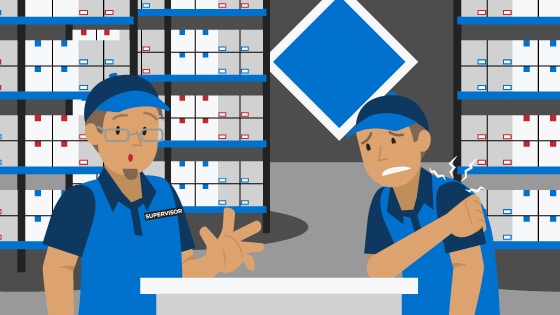
If you’re injured at work, taking the right steps early can protect both your health and your claim:
Small mistakes early in the process can create big issues later, especially in contested claims.
Yes, in many cases you can. Because Sam’s Club is a non-subscriber, injured employees may have the right to sue when negligence contributed to the injury.
Potential damages may include compensation for:
In serious cases, these damages may be substantially broader than what a traditional workers’ compensation claim would provide.
While non-subscriber employers like Sam’s Club don’t provide state-regulated benefits, you may still be entitled to compensation for:
Keep in mind, these benefits are not automatic. They may require negotiation or litigation to pursue successfully.
For severe injuries, future medical care and long-term earning losses may represent a major part of the claim and should not be overlooked.

To initiate a lawsuit, you must first gather all necessary documentation: injury reports, witness accounts, employment records, and medical evaluations. From there, your legal team will prepare a formal complaint and determine the appropriate venue for filing based on the details of your case.
Sometimes, other parties may also be liable. For instance, if faulty equipment caused your injury and a third party manufactured it, you might have an additional claim.
We build each case by starting with a thorough investigation. That may involve reviewing documents, gathering witness statements, and assessing the broader workplace context. Then we tailor our legal strategy based on what the evidence supports and what your recovery requires, particularly in complex situations involving Sam’s Club Workers’ Comp Claims in Texas.
Some workers think they need to handle their case alone, especially if Sam’s Club makes promises or offers quick settlements. That’s risky. Once you accept a payout, your options may be limited.
Early settlement offers may undervalue long-term medical needs, disability, or future wage loss. Before accepting any offer, it’s often worth understanding the full value of your claim by talking to an experienced lawyer.
Liability often extends beyond a single act. We evaluate the entire chain of events leading to the injury:
Uncovering the full picture helps clarify the circumstances surrounding the incident and may support a negligence claim.
An effective legal strategy rarely rests on one claim alone. Depending on your case, we may explore options such as:
This approach can help address different aspects of workplace injury cases and anticipate possible counterarguments from the company.
Getting injured on the job brings a lot to manage—medical appointments, missed work, and legal questions that can feel overwhelming. At Armstrong Lee & Baker LLP, we help injured Sam’s Club employees understand their options and consider what steps may be appropriate under Texas law.
Our firm handles non-subscriber cases involving major Texas employers and understands how these cases are often defended. Whether you’re exploring a claim, facing a denial, or evaluating a lawsuit, we can help you assess your options.
Contact us today at 832-966-7808 to learn how we can help guide you through Sam’s Club Workers’ Comp Claims in Texas.
C.J. Baker represents victims with serious injuries and he won’t let any corporation or insurance company stop his clients from getting complete justice. He has won millions of dollars for victims of 18-wheeler crashes, oilfield equipment failures, offshore platform explosions, and defective medical devices. Our lawyers have 25+ years of combined experience.











Trusted Personal Injury Attorneys in Houston
Find out if you have a case or ask us a question
by filling out the form below or call us at 832-402-6637
Armstrong, Lee & Baker did an absolutely wonderful job with my case. The resolution of my case was above and beyond what I expected! Shruti, the associate who handled my case showed great professionalism and I could not be more satisfied with the outcome. Thank you all!...

Josh Lee has been the best lawyer. He fights hard for you and will not give up until you are paid what you deserve. We were very fortunate to find him and his team. Any questions or concerns he was available day and night to answer anything we needed!
I had a great experience with this law office. The team communicated effectively and provided clear timelines for my accident case. Their professionalism and transparency made the process smooth. I highly recommend!! Emma Coomes and Dennise were amazing !

This page has been written, edited, and reviewed by a team of lawyers following our comprehensive editorial guidelines. Our lawyers have more than 20 years of legal experience as personal injury attorneys.
 Call
Call
 Message