
832.402.6637Free Consultation
Texas Home Depot workers have specific rights and benefits they need to know. Suffering an on-the-job injury at Home Depot can be physically painful, emotionally taxing, and financially burdensome. Proper documentation and strict adherence to company policies throughout the claims process are essential to ensuring a fair and accurate resolution. Seeking professional legal advice is crucial in these situations, as it provides the guidance needed to secure the compensation of damages you deserve, allowing you to focus on your recovery and overall well-being.
No. Home Depot does not provide traditional workers’ compensation insurance in Texas. Instead, the company is a non-subscriber to the Texas Workers’ Compensation Act. This means that although Home Depot has a workplace injury benefit plan, different rules and protections apply compared to traditional workers’ compensation policies. Non-subscriber employers—such as Home Depot—are still required by law to provide some form of injury coverage, according to the Texas Department of Insurance. Yet, it can be quite complex to navigate without seasoned legal representation.
Client Reviews
 Google Review
Josh Lee and the rest of the staff are all amazing. They kept me up to date and informed. I was treated like a priority every time I called, Josh even called me back on a Saturday, when the office was closed. They got me way more money than I thought even possible! I am more than satisfied and so grateful that I chose this firm. If you want a very personable, honest attorney who looks out for your best interest and gets results, call them!
Google Review I live roughly eight hours from Armstrong Lee & Baker and communication exceeded my expectations all my needs were met at every level Mr Adam and his wonderful team guided me step by step,I definitely recommend Mr Adam if ever you need a lawyer that will fight very hard for you.He was successful with my injury case got me what I deserve and more,I am forever grateful to Mr Adam and his wonderful team God bless you all
Google Review I couldn’t have asked for better representation. From day one, they took great care of me—not just as a client, but as a person. Throughout the entire injury case from my car accident, they kept me informed, made sure I felt supported, and handled every step with professionalism and confidence. At the end of the day, they got the job done. Grateful to have had them in my corner. Highly recommend.
Google Review Omg…Armstrong Lee & Baker are nothing short of amazing . From the very beginning of my initial call they where totally attentive. The entire team from Priyanka , Monique, Lydia, Eddie , and more are Par-Excellence. Priyanka & Monique , Brianna keep me in the loop on every level . Especially being my first time having to experience hiring an attorney I did not know what to expect. They all coached me play in and out on all procedures . Eddie kept me in the loop on all of my Dr. Appts. He also made sure I received all of my meds. DoorStep! The entire team are amazing ! As for me” Armstrong Lee & Baker are far beyond 5 stars … I give um a 10+”. Thank you Armstrong Lee & Baker.
Google Review I originally hired Jim antler and after a year of him stringing me along he declined my case said it wasn’t worth nothing. That’s when I called Adam at Armstrong Lee and Baker him and his associates took care of me like family got all the medical needs taken care of. Got me my next surgery Back on my feet and also got me awarded a check way bigger than what I was expecting. thank you Adam and your associates at Armstrong, Lee and Baker.
Google Review I cannot recommend Kelly Viktorin at Armstrong Lee & Baker highly enough. After being injured at work, I was incredibly discouraged as many attorneys wouldn’t take my case due to the complexities involved. From our very first consultation, Kelly and her team jumped right in, demonstrating a level of dedication and expertise that immediately put me at ease. Throughout the entire process, their communication was outstanding. I was consistently kept informed of any updates and felt like a priority. Kelly truly went above and beyond to fight for me, and I am so grateful for her hard work and commitment. If you’re facing a challenging work injury case, especially with a Texas non-subscriber, don’t hesitate to reach out to Kelly Viktorin. You’ll be in excellent hands.
Google Review When I got injured my company didn’t have workers comp. They had something called non subscriber insurance.
I tried a dozen or more lawyers and no one would take my case.
I lost my house in Texas so right as I was moving back to where I was from, Florida, o call Armstrong and Lee. They said they could take my case. Shortly after I meet Adam Grable.
Adam took the case and unraveled it like a champ. It was a difficult case and that’s why other lawyers didn’t take.
Over the next year, Adam because a friend and a member of the family.
I found him brilliant and personable and when needed he found for me.
In the end, we took a settlement even though Adam told me he had a good shot at trial. He understood i wanted this behind me!
If you ever find yourself needed a lawyer trust me Adam Grable will be on your side!
View More Reviews on Google Maps.
Non-subscriber policies differ somewhat from what Texas’s workers’ compensation program offers. Typically, you may be offered less compensation through a non-subscriber policy than you would through the traditional workers’ compensation program. If you suffer a work-related injury in which no other party was at fault, you will be at a disadvantage compared to those who work for a subscriber company.
However, unlike subscriber employers, non-subscribers like Home Depot are not immune from personal injury lawsuits filed by their employees. That means that if Home Depot or one of its employees caused your injuries, you can sue the company for negligence and potentially recover more than you would have if they were a subscriber.
At first glance, Home Depot’s injury benefit plan may seem helpful. It offers medical treatment and some wage replacement. But these plans are also designed to limit the company’s financial exposure.
Here are a few ways that can impact your claim:
Limited doctor choice: You are typically required to see company-approved medical providers. These doctors may feel direct or indirect pressure to clear you for work sooner than you’re ready.
Strict reporting deadlines: Missing a 24–48 hour reporting window can jeopardize your entire claim, even if your injury is legitimate.
Restricted benefits: Unlike workers’ comp, there is no guaranteed structure for long-term disability, impairment ratings, or lifetime medical care.
Pressure to return to work: Employees are often encouraged or pushed to return to work quickly, sometimes before fully healing, which can worsen injuries.
Claim denials based on technicalities: Small mistakes in paperwork or reporting can be used to deny benefits entirely.
Because these plans are written by the employer, they often prioritize cost control over full recovery. That’s where legal representation becomes critical.

A common issue in Home Depot injury cases is being told you’re good to return to work before you actually feel recovered. This can happen after a quick evaluation by an approved provider or after minimal treatment.
If you’re in this situation, it’s important to proceed carefully:
This type of pressure can become an important factor in a legal claim, especially if it leads to reinjury or worsening conditions.
One of the biggest advantages injured workers have against non-subscriber companies is the ability to file a personal injury lawsuit. Filing a lawsuit can be rarer under traditional workers’ compensation systems.
If your injury was caused by negligence, you may be entitled to significantly more compensation than what the internal benefit plan offers.
Examples of negligence may include:
In these cases, Home Depot cannot rely on many of the legal defenses that subscriber employers can use. For example, they generally cannot argue that you “assumed the risk” of your job. This can make non-subscriber cases particularly powerful when handled correctly.
We’ll fight for the compensation you deserve.
Looking for a personal injury lawyer near you in Houston, TX?

When dealing with a non-subscriber like Home Depot, documentation can make or break your case. Since the company controls much of the internal process, having your own records creates an essential layer of protection.
You should document:
The more independent evidence you have, the harder it becomes for the company or its insurance representatives to downplay or deny your claim.
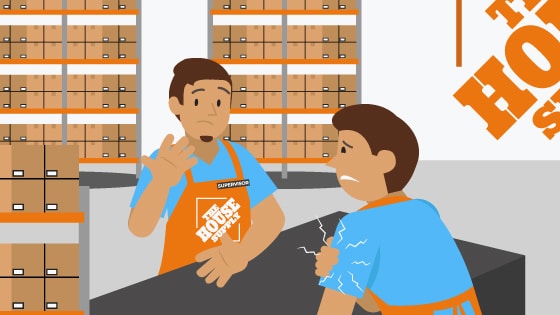
Most people expect a straightforward process after a workplace injury: report it, get treated, and receive benefits. With non-subscriber employers, it rarely works that way.
Instead, you’re navigating a system where the employer sets the rules, selects the medical providers, evaluates your claim, and ultimately decides what to pay, unless challenged.
That imbalance is exactly why personal injury law firms like Armstrong Lee & Baker LLP focus heavily on non-subscriber cases. These claims often require a more aggressive, evidence-driven approach than standard workers’ compensation claims.
While non-subscriber plans can be restrictive, they also open the door to broader financial recovery through a lawsuit. Unlike workers’ compensation, which limits what you can recover, personal injury claims allow for a wider range of damages.
This can include:
In serious injury cases, this difference can be substantial, sometimes resulting in significantly higher compensation than a traditional workers’ comp claim would allow.
Employees of Home Depot who suffer injuries while performing job-related duties are generally eligible for benefits under the company’s injury benefit plan. However, eligibility depends on the nature of the injury and compliance with specific reporting requirements.
It is important to understand that Home Depot employees in Texas are not covered by traditional workers’ compensation at all. Instead, any benefits available come exclusively through the company’s private injury benefit plan, which operates under a completely different set of rules. This means there is no state-regulated system overseeing your claim, and the protections typically associated with workers’ compensation, such as standardized benefits and dispute resolution processes, do not apply.
To qualify for benefits under the injury benefit plan, employees usually need to:
Because this is not a traditional workers’ compensation system in Texas, failing to follow these internal requirements can have more serious consequences. In many cases, missing a deadline or seeking treatment outside the approved network can result in an outright denial of benefits, with limited options for appeal unless legal action is pursued.
One could be held ineligible if the accident has been caused by an employee’s misbehavior, carelessness in following safety procedures, or intoxication. To elaborate, if a claim arises for an injury sustained in failure to wear required protective equipment at work, one could experience difficulty in claiming compensatory benefits. In cases of specific exceptions, claims relating to repeated trauma injury or contracting any illness due to repeated exposure under hazardous conditions will be similarly problematic to get proved as a work cause. If Home Depot denies your claim, or you feel that your injury was due to negligence, a professional attorney can determine if you qualify for more compensation. Legal assistance is especially crucial in cases where Home Depot’s benefit plan fails to cover long-term medical care or lost income adequately.

While specific injury data is not available for Home Depot, workplace injury statistics throughout the retail industry indicate great risk to employees. According to the Occupational Safety and Health Administration (OSHA), common injuries in retail include:
Workers at Home Depot face daily exposure to various hazards, especially in Houston’s bustling retail environment. Large warehouse settings can increase the risk of accidents, with potential dangers such as falling items, forklift incidents, and equipment malfunctions. While following proactive safety measures and adhering to OSHA guidelines can help mitigate these risks, accidents can still happen.
Data from similar industries show that workers in home improvement and retail are particularly susceptible to repetitive strain injuries, especially in jobs that involve stocking shelves, loading trucks, or standing for extended periods. According to the Bureau of Labor Statistics, retail workers had one of the highest rates of injury across industries in 2021.
While Home Depot workers’ compensation is not in place in Texas in the typical sense, you have several options. Home Depot, in addition to some other non-subscriber companies, has insurance plans for its employees that suffer work-related injuries. Our attorneys can help you fight to receive your benefits under Home Depot’s policy after your injury. That way, you can focus on your recovery. If your injury was due to negligent actions by your employer or another employee, we can assist you in filing a personal injury lawsuit for damages.
Damages in a lawsuit for negligence could include economic and non-economic damages, such as:
Consider reaching out to our attorneys for assistance in determining whether you may be able to file a lawsuit.

Our knowledgeable lawyers can help you claim compensation for your injuries from any Home Depot location in Texas. We can fight for you and help you claim your benefits under Home Depot’s non-subscriber policy. We would be able to file a lawsuit on your behalf if your injury was caused by the negligence of Home Depot or one of its employees.
If you get hurt at work, here is how to file your claim under the Home Depot Injury Benefit Plan:
Our team of experienced attorneys is here to help you claim compensation for your injuries at any Home Depot store in Texas. If your injury was caused by Home Depot’s negligence, we can file a lawsuit and vigorously fight for the benefits you deserve. You can count on us to advocate for your rights every step of the way.
Get a Free Case Evaluation
Under Texas law, the time limit to file a claim is governed by both the terms of Home Depot’s workplace injury benefits plan and the state’s statute of limitations for personal injury claims.
Delays in reporting and filing can greatly reduce your capacity to recover compensation. Failure to report your injury in a timely manner could result in an absolute denial of benefits under Home Depot’s plan. Similarly, failing to file legal claims within the two-year statute of limitations could extinguish your right to seek compensation via the courts.
It’s not uncommon for injured employees to receive early settlement offers through a company’s injury benefit plan. While it may be tempting to accept quick payment, these offers are often far lower than what your case may actually be worth.
Before accepting anything, it’s important to understand what your injury may cost long-term, whether negligence played a role in your accident, and what compensation you may be entitled to through a lawsuit.
Once you accept a settlement, you typically give up your right to pursue additional compensation. A quick conversation with an attorney can help you avoid leaving significant money on the table.
If you are suffering due to an accident at Home Depot, contact our lawyers at Armstrong Lee & Baker LLP. Our attorneys are problem-solvers who believe in aggressive advocacy for every client. Practice areas at our firm include not only non-subscriber claims but also trucking accidents and oil rig accidents, among many others. Do not hesitate to reach out to us today at 832-402-6637 or contact us online for a free consultation.








Trusted Personal Injury Attorneys in Houston
Find out if you have a case or ask us a question
by filling out the form below or call us at 832-402-6637
Armstrong, Lee & Baker did an absolutely wonderful job with my case. The resolution of my case was above and beyond what I expected! Shruti, the associate who handled my case showed great professionalism and I could not be more satisfied with the outcome. Thank you all!...

Josh Lee has been the best lawyer. He fights hard for you and will not give up until you are paid what you deserve. We were very fortunate to find him and his team. Any questions or concerns he was available day and night to answer anything we needed!
I had a great experience with this law office. The team communicated effectively and provided clear timelines for my accident case. Their professionalism and transparency made the process smooth. I highly recommend!! Emma Coomes and Dennise were amazing !

This page has been written, edited, and reviewed by a team of lawyers following our comprehensive editorial guidelines. Our lawyers have more than 20 years of legal experience as personal injury attorneys.
 Call
Call
 Message