
832.402.6637Free Consultation
When you get hurt working on a farm in Texas, lots of things go through your head: How bad is the injury? How will it affect your work? And just as importantly, what are your rights and legal options?
You might assume that a farm injury works like that on any other job: You report it, get some medical care, and workers’ comp covers it. But on many farms in Texas, that is not how it works. Injuries on many Texas farms are handled differently than most other workplace injuries, and if you don’t understand that early, it can cost you.
So before anything else, let’s see what you are actually dealing with.
Get a Free Case Evaluation
After a farm injury, what happens next can feel surprisingly informal. Your employer may tell you to go to a specific clinic. You might be encouraged to wait a few days and see if it improves. In some cases, you may even be told the situation will be handled internally and that there is no need to make it into something bigger.
Yes, that may sound reasonable, but often is not.
Here’s why: In Texas, many agricultural employers do not carry traditional workers’ compensation insurance. They have chosen not to subscribe to the state’s traditional workers’ compensation system and as such, they are called “non-subscribers.” And when that’s the case, the process that applies after an injury is not what most workers expect.
In a non-subscriber situation, your employer is not operating within a neutral, state-run system. They are managing the situation on their own terms, often with the goal of limiting what they have to pay. And note, in some cases, a non-subscriber farm may offer a private injury benefit plan. But these plans are typically limited and structured in a way that prioritizes the company’s interests, not yours.
If the farm you work for is a non-subscriber, you are not in a standard system at all; more importantly, there is no automatic coverage for medical care or lost wages. Instead, you need to use other legal avenues to get compensated for your injury, typically a lawsuit for negligence.
That might sound like a disadvantage, and in some ways it is, but it can also work in your favor. Here’s why: Unlike regular workers’ compensation claims, a non-subscriber lawsuit allows for a broader range of damages, including full lost wages and pain and suffering.
The key then is understanding which situation you are in. Most workers do not get a clear answer to that right away, and that confusion is where problems start.
One of the first things to figure out is whether your employer is a subscriber or a non-subscriber. Many farms are non-subscribers, and that changes how you need to approach things.
If your employer is a subscriber, meaning they carry workers’ compensation, your claim will go through that system. That usually means you will be directed to certain doctors and there are specific procedures you need to follow. In that situation, the focus is on getting your medical care covered and making sure your injury is properly documented within that system.
If your employer is a non-subscriber, as is common, it is a different situation. You are not in a workers’ comp system at all. That means your ability to recover depends on what happened and whether the employer did something wrong. It also means you need to be more careful early on. Statements, reports, and paperwork can all end up being used later, so it is important not to rush into anything or assume the process is neutral.
Most workers do not stop to figure this out. They just try to push through it. That is part of the culture. You keep working, hope it gets better, and deal with it later.
But that is where problems start.
In a non-subscriber situation, a few things matter right away:
Most problems in these cases start early. Avoiding those early mistakes can make a real difference later.
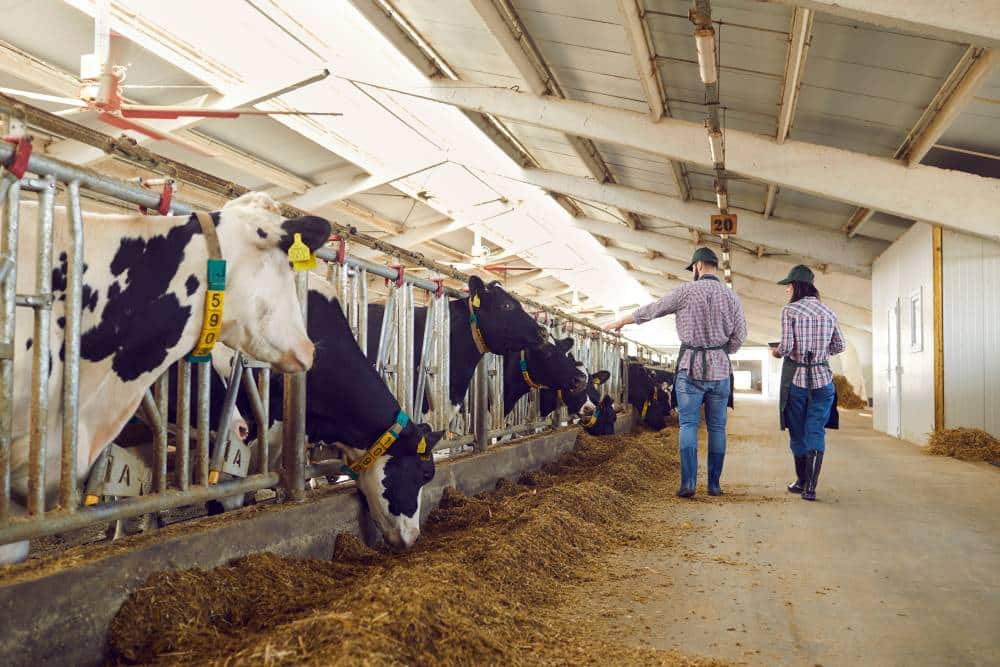
Not all farm work is created equal, and the kind of work you were doing at the time of the injury can shape how your case is evaluated.
Some jobs revolve around livestock. Cattle operations, dairy farms, poultry facilities, hog operations, and sheep or goat farming all bring their own risks. Large animals can be predictably unpredictable, even when you know them well. Kicks and crush injuries are part of that environment, especially when gates or equipment are not maintained the way they should be.
Other work is centered around crops and field operations. Cotton, corn, wheat, sorghum, rice, and hay production all rely heavily on machinery. As such, tractors, balers, harvesters, and irrigation systems need to function properly. It is when something slips, when a repair gets put off, or when the job is rushed, that is when injuries can happen, and quickly.
There are also more specialized operations, for example,
These sorts of unique operations come with a whole different mix of risks. Repetitive work injuries and equipment issues are not uncommon.
And then there is the exposure side of things. Fertilizers, pesticides, and other chemicals are part of the job in most operations and without proper protection and handling, those exposures can lead to injuries that are not always obvious right away.
Yet, while different types of farm work carry different risks, the pattern tends to be the same: Something is not maintained or is pushed too far and workers like you end up paying the price.
Unfair? Yes. But you have rights.
Client Reviews
 Google Review
I cannot recommend Kelly Viktorin at Armstrong Lee & Baker highly enough. After being injured at work, I was incredibly discouraged as many attorneys wouldn’t take my case due to the complexities involved. From our very first consultation, Kelly and her team jumped right in, demonstrating a level of dedication and expertise that immediately put me at ease. Throughout the entire process, their communication was outstanding. I was consistently kept informed of any updates and felt like a priority. Kelly truly went above and beyond to fight for me, and I am so grateful for her hard work and commitment. If you’re facing a challenging work injury case, especially with a Texas non-subscriber, don’t hesitate to reach out to Kelly Viktorin. You’ll be in excellent hands.
Google Review When I got injured my company didn’t have workers comp. They had something called non subscriber insurance. I tried a dozen or more lawyers and no one would take my case. I lost my house in Texas so right as I was moving back to where I was from, Florida, I called Armstrong Lee & Bkaer. They said they could take my case. Shortly after I meet Adam Grable.
Adam took the case and unraveled it like a champ. It was a difficult case and that’s why other lawyers didn’t take. Over the next year, Adam because a friend and a member of the family. I found him brilliant and personable and when needed he found for me. In the end, we took a settlement even though Adam told me he had a good shot at trial. He understood i wanted this behind me! If you ever find yourself needed a lawyer trust me Adam Grable will be on your side!
Google Review I had been injured at work, and the attorneys at Armstrong Lee & Baker fought for what I was owed. I’m graciously appreciative for their attentiveness and swiftness with handling my case. Shout out to Lindsey W.
Google Review When I got injured my company didn’t have workers comp. They had something called non subscriber insurance.
I tried a dozen or more lawyers and no one would take my case.
I lost my house in Texas so right as I was moving back to where I was from, Florida, o call Armstrong and Lee. They said they could take my case. Shortly after I meet Adam Grable.
Adam took the case and unraveled it like a champ. It was a difficult case and that’s why other lawyers didn’t take.
Over the next year, Adam because a friend and a member of the family.
I found him brilliant and personable and when needed he found for me.
In the end, we took a settlement even though Adam told me he had a good shot at trial. He understood i wanted this behind me!
If you ever find yourself needed a lawyer trust me Adam Grable will be on your side!
View More Reviews on Google Maps.
Not every injury turns into a legal case. But a lot more of them do than people think.
The key question in a non-subscriber situation is not just whether you were hurt, it is whether something about the work environment contributed to causing your injury. In most cases, you will need to show that something about the way the work was set up or handled fell short.
That connection is critical. You are looking at whether the employer failed in some way that led to the injury. If that link is there, even partially, you may have a case worth pursuing.
When a farm injury involves a non-subscriber employer, the scope of recovery is different from what workers’ compensation would provide. With workers’ comp, proving fault is not an issue. If you are hurt, you get treated, period. But in exchange for that guaranteed coverage, you give up the right to sue the responsible party. That is the trade-off.
In a non-subscriber case, where there is no workers’ comp, the issue is the potential negligence of the employer and what just compensation is for you, the injured party. That can include lost wages, both now and into the future, and medical care, including treatment that may be needed long after the initial injury.
And then there is the human side of it. Pain and suffering. Limitations. Frustrations. Challenges. Emotional upset. The day-to-day impact of not being able to move or work the way you used to are real losses, and in the right case, they are part of what can be recovered.
Finally, compensation may also be dependent upon how many parties were responsible for the accident. Some farms are run by a single operation, but many involve multiple parties. Owners, contractors, equipment providers, and outside crews can all be part of the same work environment, and that means that there is potentially more insurance coverage for the injured party.
And that is why the ceiling in these cases is often higher than people expect: injury, debilitation, pain, suffering, multiple parties, and multiple insurance companies all add up.
Most farm injury cases do not resolve overnight.
Once a claim is raised, there is usually a period of investigation. The parties need to discover what happened, who was involved, what condition the equipment was in, and what could have been done differently. That takes time.
In many cases, when liability and injury are clear, there will be an effort to resolve things without going to court, to settle. But that only happens if everything is fairly clear-cut. If it is not, the case will move forward, including taking it to trial if necessary. And that too takes time.
Either way, the goal of your attorney is the same: To hold the responsible party accountable and to get you just compensation for your injury and what you will need to move forward.
Sometimes the first move is just to understand what your options are and how the process works. That’s where we come in. If you have been injured while working on a farm in Texas, you can reach out to Armstrong Lee & Baker LLP for a free consultation.
We’re here to help.
C.J. Baker represents victims with serious injuries and he won’t let any corporation or insurance company stop his clients from getting complete justice. He has won millions of dollars for victims of 18-wheeler crashes, oilfield equipment failures, offshore platform explosions, and defective medical devices. Our lawyers have 25+ years of combined experience.











Trusted Personal Injury Attorneys in Houston
Find out if you have a case or ask us a question
by filling out the form below or call us at 832-402-6637
Armstrong, Lee & Baker did an absolutely wonderful job with my case. The resolution of my case was above and beyond what I expected! Shruti, the associate who handled my case showed great professionalism and I could not be more satisfied with the outcome. Thank you all!...

Josh Lee has been the best lawyer. He fights hard for you and will not give up until you are paid what you deserve. We were very fortunate to find him and his team. Any questions or concerns he was available day and night to answer anything we needed!
I had a great experience with this law office. The team communicated effectively and provided clear timelines for my accident case. Their professionalism and transparency made the process smooth. I highly recommend!! Emma Coomes and Dennise were amazing !

This page has been written, edited, and reviewed by a team of lawyers following our comprehensive editorial guidelines. Our lawyers have more than 20 years of legal experience as personal injury attorneys.
 Call
Call
 Message