
832.402.6637Free Consultation
If you were hurt on the job at a retail store in Texas, whether stocking shelves, unloading trucks, working a cash register, or managing a stockroom, you may have more legal options than you realize. Many Texas retail workers don’t know whether their employer carries workers’ compensation insurance, and that one fact can completely change how you pursue compensation after a work injury.
At Armstrong Lee & Baker LLP, we represent injured retail workers across Houston and Texas. Our firm focuses on non-subscriber work injury claims, and we’ve recovered millions for workers just like you. We’ll fight for the compensation you deserve.








Workers’ compensation is an insurance program designed to provide medical benefits and partial wage replacement to employees who are injured on the job. In most states, employers are required to carry it. Texas is different.
Texas is one of the only states in the country that does not require private employers to carry workers’ compensation insurance. Employers who purchase coverage are called “subscribers.” Employers who choose not to purchase coverage are called “non-subscribers.” Many of Texas’s largest retailers fall into this category.
Some of the largest retail chains doing business in Texas are non-subscribers, including:
If you are injured while working at one of these stores, you cannot file a standard workers’ comp claim through the Texas Division of Workers’ Compensation. Your path to compensation is different. In many cases, it results in more money.
Get a Free Case Evaluation
When your retail employer is a non-subscriber, here is what changes:
There is no state-administered insurance policy to claim against. Instead, many non-subscriber retailers offer their own private injury benefit plans. These internal plans typically pay far less than what you are actually owed. They often exclude pain and suffering, limit medical coverage, and cap lost wages below your actual earnings.
This is the most important legal right Texas gives injured workers at non-subscriber employers. You can file a personal injury lawsuit against your employer if their negligence caused your injury. When you do:
Non-subscriber employers in Texas also lose many of their common law defenses. They cannot typically argue that you assumed the risk of injury, that a fellow employee caused your injury, or that you were contributorily negligent. These missing defenses make non-subscriber claims significantly more powerful for injured workers.
Unlike traditional workers’ comp, which pays regardless of fault, a non-subscriber claim requires you to show that your employer’s negligence caused your injury. This means proving that the employer owed you a safe workplace, that they breached that duty through unsafe conditions, inadequate training, faulty equipment, or ignored hazards, and that the breach caused your specific injury and losses.
This is why having an attorney who focuses on non-subscriber cases matters. The legal standards are different, and large retail corporations will have experienced defense attorneys trying to minimize what they pay you.
Retail work is more physically demanding and more dangerous than many people realize. Common injuries we see in retail worker cases include:
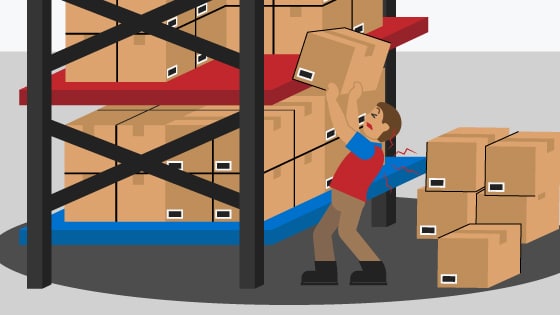
Stockroom employees, overnight freight teams, and receiving dock workers routinely lift, move, and organize heavy merchandise. Injuries to the back, neck, shoulders, and knees from overexertion are among the most common in retail. When these injuries occur because of unrealistic workloads, no lift-assist equipment, or lack of proper training, employer negligence may be at issue.
Wet floors, recently mopped surfaces without adequate warning signs, spilled merchandise, and cluttered aisles all create dangerous fall hazards. Retail employers are responsible for maintaining safe store conditions. When a fall results from ignored or unreported hazards, the employer may be liable.
Overstocked shelves, improperly secured displays, and disorganized stockrooms can send merchandise crashing down on workers. Head, neck, and shoulder injuries from falling objects can be severe. If your employer failed to maintain safe shelving and storage practices or failed to provide adequate protective equipment, you may have a strong claim.
In large retail stores, distribution centers, and warehouse-style retailers, forklifts, pallet jacks, and other powered industrial equipment are used daily. Inadequate training, poor equipment maintenance, or safety violations can lead to crushing injuries, amputations, or death.
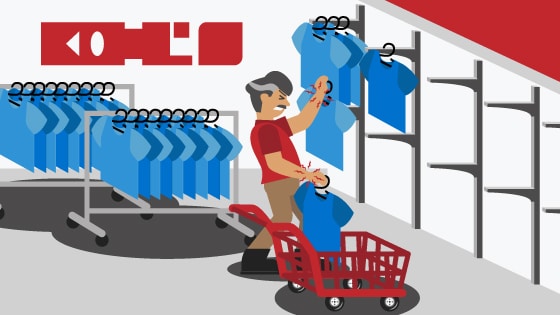
Cashiers, stockers, and fulfillment workers who perform the same motions for hours every day can develop carpal tunnel syndrome, tendinitis, and other repetitive stress injuries. These conditions are often dismissed as pre-existing or gradual, but that does not disqualify your claim. Under Texas law, you may recover compensation if your working conditions caused or significantly aggravated a condition, even if you had a prior injury or diagnosis. Do not assume a pre-existing condition bars you from recovery.
Injuries don’t only happen inside the store. Cart retrieval, loading dock work, and deliveries can expose workers to vehicle collisions, poor lighting, and uneven pavement. These incidents may support a negligence claim, and in some cases, a third-party claim as well.
The steps you take immediately after a work injury can significantly affect the outcome of your case. Here is what we recommend:
Even if you think the injury is minor, report it immediately. Deadlines to report a work injury can be very short, sometimes as little as 24 to 48 hours under a private benefit plan. Failing to report promptly gives the employer a basis to challenge or deny your claim.\
Seek medical attention as soon as possible. Your health comes first. Delays in treatment are also commonly used by employers and insurance companies to suggest the injury wasn’t serious. Keep all medical records, treatment notes, prescriptions, and receipts.
If you are physically able, take photos of the scene, the hazard that caused your injury, and your injuries themselves. Write down names of coworkers who witnessed the accident. Keep a record of your symptoms, how the injury affects your daily life, and any conversations with management about the incident.
Non-subscriber retailers often move quickly to offer injured workers a settlement through their private benefit plan. These offers are frequently for far less than your injury is actually worth, and accepting one can permanently close off your right to sue. Do not sign any release or settlement agreement before speaking with an attorney.
The legal process for non-subscriber claims is fundamentally different from traditional workers’ comp. An experienced attorney can confirm your employer’s coverage status, evaluate whether negligence is present, calculate the full value of your damages, and fight to make sure you receive fair compensation.
Client Reviews
 Google Review
I cannot recommend Kelly Viktorin at Armstrong Lee & Baker highly enough. After being injured at work, I was incredibly discouraged as many attorneys wouldn’t take my case due to the complexities involved. From our very first consultation, Kelly and her team jumped right in, demonstrating a level of dedication and expertise that immediately put me at ease. Throughout the entire process, their communication was outstanding. I was consistently kept informed of any updates and felt like a priority. Kelly truly went above and beyond to fight for me, and I am so grateful for her hard work and commitment. If you’re facing a challenging work injury case, especially with a Texas non-subscriber, don’t hesitate to reach out to Kelly Viktorin. You’ll be in excellent hands.
Google Review When I got injured my company didn’t have workers comp. They had something called non subscriber insurance. I tried a dozen or more lawyers and no one would take my case. I lost my house in Texas so right as I was moving back to where I was from, Florida, I called Armstrong Lee & Bkaer. They said they could take my case. Shortly after I meet Adam Grable.
Adam took the case and unraveled it like a champ. It was a difficult case and that’s why other lawyers didn’t take. Over the next year, Adam because a friend and a member of the family. I found him brilliant and personable and when needed he found for me. In the end, we took a settlement even though Adam told me he had a good shot at trial. He understood i wanted this behind me! If you ever find yourself needed a lawyer trust me Adam Grable will be on your side!
Google Review I had been injured at work, and the attorneys at Armstrong Lee & Baker fought for what I was owed. I’m graciously appreciative for their attentiveness and swiftness with handling my case. Shout out to Lindsey W.
Google Review When I got injured my company didn’t have workers comp. They had something called non subscriber insurance.
I tried a dozen or more lawyers and no one would take my case.
I lost my house in Texas so right as I was moving back to where I was from, Florida, o call Armstrong and Lee. They said they could take my case. Shortly after I meet Adam Grable.
Adam took the case and unraveled it like a champ. It was a difficult case and that’s why other lawyers didn’t take.
Over the next year, Adam because a friend and a member of the family.
I found him brilliant and personable and when needed he found for me.
In the end, we took a settlement even though Adam told me he had a good shot at trial. He understood i wanted this behind me!
If you ever find yourself needed a lawyer trust me Adam Grable will be on your side!
View More Reviews on Google Maps.
If your retail employer is a non-subscriber and their negligence caused your injury, you may be entitled to recover:
When an employer’s conduct was especially reckless or dangerous, you may also be entitled to exemplary (punitive) damages. Under Texas law, these can be up to twice your economic damages plus noneconomic damages, or $200,000, whichever is greater.
This stands in sharp contrast to what a private benefit plan offers. Most internal retail injury plans cap benefits, exclude pain and suffering entirely, and require you to use company-designated doctors whose opinions frequently favor the employer.
Most non-subscriber cases resolve through a negotiated settlement before trial. Because non-subscriber employers lose key legal defenses, they often have strong incentive to settle rather than face a jury, particularly when confronted by an attorney who is prepared to go to court. That leverage is one reason why having experienced legal representation matters from day one.
What results like these mean for your case:
$5,500,000 recovered for a client who suffered a serious back injury while lifting heavy equipment at work.
$6,000,000 recovered for a client who suffered internal organ injuries after receiving inadequate training on a forklift.
These cases were won against non-subscriber employers. Results vary by case, but they reflect what is possible when employer negligence is proven and an attorney is willing to fight.
Before you accept anything from your employer or sign any documents, speak with an attorney who handles non-subscriber cases. The company will have legal representation protecting its interests from day one. You deserve the same.
Armstrong Lee & Baker LLP has recovered millions of dollars for injured Texas workers, including employees of major retail chains. We know the tactics these companies use to minimize and deny claims, and we know how to fight back.
Contact us today for a free, no-obligation consultation. No fee unless we win.
C.J. Baker represents victims with serious injuries and he won’t let any corporation or insurance company stop his clients from getting complete justice. He has won millions of dollars for victims of 18-wheeler crashes, oilfield equipment failures, offshore platform explosions, and defective medical devices. Our lawyers have 25+ years of combined experience.








Trusted Personal Injury Attorneys in Houston
Find out if you have a case or ask us a question
by filling out the form below or call us at 832-402-6637
Armstrong, Lee & Baker did an absolutely wonderful job with my case. The resolution of my case was above and beyond what I expected! Shruti, the associate who handled my case showed great professionalism and I could not be more satisfied with the outcome. Thank you all!...

Josh Lee has been the best lawyer. He fights hard for you and will not give up until you are paid what you deserve. We were very fortunate to find him and his team. Any questions or concerns he was available day and night to answer anything we needed!
I had a great experience with this law office. The team communicated effectively and provided clear timelines for my accident case. Their professionalism and transparency made the process smooth. I highly recommend!! Emma Coomes and Dennise were amazing !

This page has been written, edited, and reviewed by a team of lawyers following our comprehensive editorial guidelines. Our lawyers have more than 20 years of legal experience as personal injury attorneys.
 Call Us: 832-709-1124
 watch our video
  Call
Call
 Message