
832.402.6637Free Consultation
Updated & Reviewed by
C.J. Baker -
June 10, 2026
Despite all of the safety equipment and procedures, oilfield accidents continue to be fairly common. Most of these accident are avoidable, but when production is pushed, shortcuts are made, and the odds of accidents increase. Unfortunately, some of these situations lead to serious accidents resulting in the loss of life. Oilfield workers understand that the job carries risks, but deadly accidents are often caused by negligence, poor training, inadequate supervision, defective equipment, or companies failing to follow proper safety standards. When that happens, workers and their families deserve answers, accountability, and the compensation they are owed.
Texas law gives the family of someone killed due to another party’s negligence two separate legal claims they can bring. One claim covers the direct losses to the surviving family, while the other covers the pain and suffering of your loved one before they passed. You have two years to file that suit from the date of death, and you almost certainly will not have to pay your lawyer anything unless you win the case.
If your family has lost someone in an oilfield accident, it is important to speak with an experienced Texas oilfield wrongful death lawyer as soon as possible. Not only will they be able to help secure the maximum compensation available, but they will also provide piece of mind and guidance throughout the entire process. If you would like to learn more about how we can help secure the compensation you deserve, contact Armstrong Lee & Baker today for a free consultation.
A wrongful death claim is a civil lawsuit brought by the family of someone who was killed because of another party’s negligence. In Texas, the rules live in Chapter 71 of the Civil Practice and Remedies Code, usually shortened to “CPRC.”
As mentioned, Texas law actually gives the family two separate claims that people often mistakenly lump together but which are, in fact, two technically distinct legal remedies:
A good oilfield wrongful death lawyer would usually elect to file both sorts of claims and the two are typically filed together and tried as one case. Also note that siblings, grandparents, cousins, and household members who never adopted are not eligible to bring either type of claim. The good news is that the parties need not all file separate suits; one family member can file on behalf of all eligible beneficiaries.
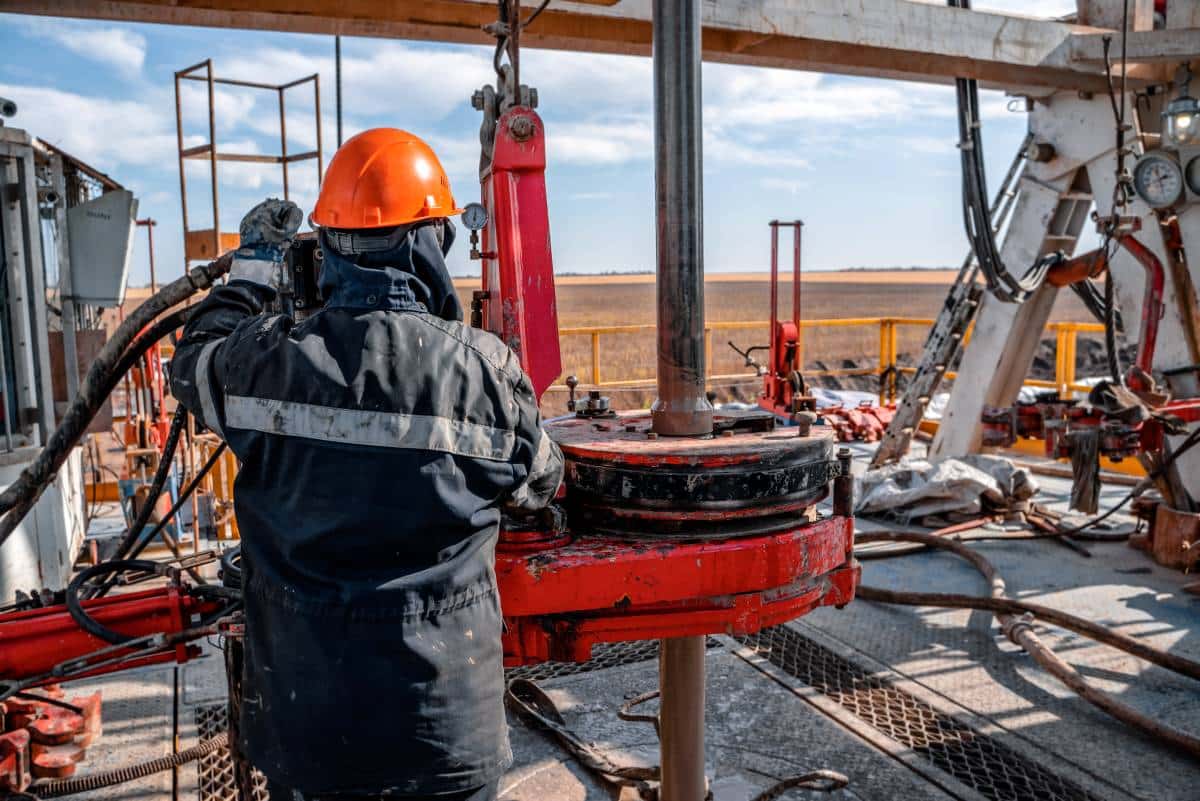
Most Texas oilfield deaths happen on land in places like The Permian, the Eagle Ford, the Barnett, the East Texas oil fields. In fact, consider this sobering statistic: The Permian Basin in West Texas is the most active and most dangerous oilfield in the country. A federal CDC report tracking oil-and-gas extraction worker deaths from 2014 through 2019 found that the Permian Basin alone accounted for 31.5% of all U.S. oilfield fatalities during that period.
The tricky part of the law here has to do with where the death occurred. In Texas, when a death happens on a land-based oil well site, or on the road to or from it, at a service yard, or anywhere else on Texas soil, Texas state wrongful death law controls. Conversely, if your loved one died on a fixed offshore Gulf platform, federal law via the Outer Continental Shelf Lands Act would control (though it borrows most of Texas’s rules anyway). And finally, if your loved one was a crew member of a moving vessel, the federal Jones Act or the Death on the High Seas Act may apply instead.
(Because the vast majority of such Texas oilfield deaths happen on land, the rest of this page is about Texas land-based oilfield deaths.)
Family members have two years from the date of death to file a claim (i.e., a lawsuit.) That is the rule under CPRC § 16.003(b), and Texas courts apply it strictly.
A couple of important wrinkles of which to be aware: The two-year clock starts ticking on the date of the death, not the date of the injury; if your loved one was hurt in February and died from those injuries in August, the clock starts ticking in August. The clock can also be delayed from starting (Texas law call this “tolling”) for minor children who lost a parent. In that case, the two-year period does not begin until the child turns 18.
Even with two years on the clock, waiting is bad. Oilfield evidence rots. Memories fade and witnesses move. Accident sites get cleaned up. Equipment gets repaired or scrapped. That’s why hiring a lawyer early on is the smart move. They can work from the get-go to preserve critical evidence, whereas a lawyer who comes in twenty-one months after the accident is stuck working with whatever happens to still exist.

Here is how a Texas oilfield wrongful death case typically moves from the day you call a lawyer to the day a check is cut to the family.
Strong wrongful death oilfield cases in Texas tend to share four things.
First, you want to see a documented safety failure, such as an OSHA citation, or Texas Railroad Commission findings of a regulatory violation, or a clear breach of an industry standard such as an API (the American Petroleum Institute) recommended practice. These give the case a paper trail of institutional negligence that defense counsel cannot wave away.
Second, a solid case would involve having multiple deep-pocket defendants. Texas oilfield work is layered. There are operators, drilling contractors, service companies, and equipment manufacturers, all of whom usually carry insurance running to seven or eight figures.
Next, a good case would have a sympathetic and dependent surviving family, such as a widow with dependent children or parents who relied on a young worker. Winning cases are often those where the family’s loss is concrete and demonstrable.
Finally, a good case is one where there liability is clear and there are no major comparative-fault issues (that is, the decedent was not also partially to blame for the death.) Instead, it is the defendant’s negligence that was the primary cause.
Also, do not be afraid of the team of corporate lawyers that the oil company has at its disposal. They are not the boogeyman it may look like from the outside. Yes, sure, they are there to protect the interests of their clients, but know too that they are also paid to negotiate seriously with plaintiff firms who have prepared their case and who have a track record of trying cases when the settlement offer is not serious.

This is the one issue that keeps families from calling an attorney… and it should not.
Here is how Texas oilfield wrongful death cases actually get paid for:
When a Texas oilfield wrongful death case succeeds, the law compensates the family in several distinct ways.
Understand that no two oilfield cases settle for the same number. Outcomes depend on the degree of liability, the level of the defendant’s insurance coverage, your loved one’s earnings, and whether the case goes to trial.
If you lost someone in a Texas oilfield accident, the right move is to talk to a personal injury lawyer who handles oilfield wrongful death cases early on. Initial consultations are free and you pay nothing out of pocket. The trial team at Armstrong Lee & Baker LLP handles these cases under Texas law every day, and they would be glad to speak with you for free, answer your questions, and help you understand your options.
C.J. Baker represents victims with serious injuries and he won’t let any corporation or insurance company stop his clients from getting complete justice. He has won millions of dollars for victims of 18-wheeler crashes, oilfield equipment failures, offshore platform explosions, and defective medical devices. Our lawyers have 25+ years of combined experience.




This page has been written, edited, and reviewed by a team of lawyers following our comprehensive editorial guidelines. Our lawyers have more than 20 years of legal experience as personal injury attorneys.
Representing Injured Corpus Christi Pipeline Explosion Victims & Their Families On Friday, August 21st at approximately 8:00 AM, a devastating pipeline explosion t...
Posted by Scott Armstrong

Let’s say you were injured on the job when a forklift operator clipped a stack of boxes. One wobbled, then toppled, sending a heavy load crashing onto your shoulder w...
Posted by C.J. Baker

Workplace injury claims in Texas can be complex, and understanding how the insurance provider Anchor Risk Management fits into the process is crucial for injured employ...
Posted by Joshua Lee
 Call
Call
 Message