
832.402.6637Free Consultation
Updated & Reviewed by
C.J. Baker -
July 7, 2026
In most serious truck accidents there are more than one liable parties. Understanding who those parties are, and why they may be responsible, can make the difference between partial and complete compensation.
The important thing to note here is that Texas follows a rule known as “comparative negligence” under the Texas Civil Practice and Remedies Code (“CPRC”) § 33.001. Comparative negligence means that more than one defendant can be at fault for the accident and each is assigned a percentage of the responsibility for it. For the driver who was hit and hurt in a truck accident, that means that there is usually more than one defendant to go after, which is generally good news.
Let’s say that the truck driver, the trucking company, the cargo loader, and a maintenance contractor all share the blame. You can pursue all of them simultaneously. This means you are able to file claims against four defendants which is typically not possible in a car accident case between two drivers. But in a truck accident case? It is often where the real damages recovery comes from.
It should actually be no surprise that Texas leads the nation in fatal large truck crashes. Trucking is what we do. Indeed, the state is a primary freight corridor between the coasts and Mexico, and the Permian Basin alone puts thousands of oilfield trucks on west Texas highways every day. So, as they say, accidents happen, and when they do, sorting out liability and compensation can get complicated. That’s why it’s important to work with an experienced Texas truck accident injury law firm like Armstrong Lee and Baker to ensure you get the compensation you deserve.
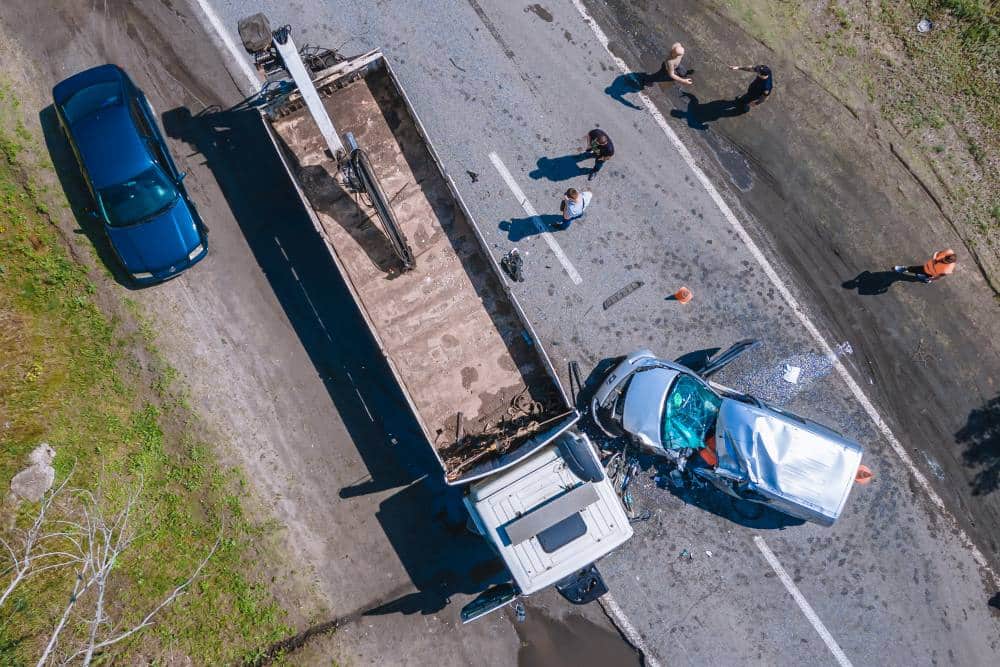
As indicated, there may be several defendants who are liable in a Texas truck accident case. They typically include the following:
The driver is the obvious starting point. Fatigue, distraction, speed, impairment, and failure to maintain lane are all driver-level failures that establish negligence.
Federal regulations under 49 C.F.R. Part 395 limit how many consecutive hours a commercial driver can operate a vehicle. Violations of those hours-of-service rules are not just evidence of negligence, under Texas law, violating a safety statute constitutes negligence per se, meaning the violation of the rule itself means the driver was legally negligent.
But how would you know if there was a violation of that federal rule? That’s the first reason why hiring a sharp Texas truck accident attorney from the start can make a big difference. Your lawyer will know how to gather this sort of critical evidence. In this case, Electronic Logging Devices, required under 49 C.F.R. Part 395.8 since 2017, automatically record a driver’s hours, speed, and operational data. That data is what your lawyer will work to obtain, and also would be among the first things a carrier will try to limit access to.
Trucking companies are liable for their drivers’ conduct under a doctrine known as “respondeat superior.” That is just a fancy Latin term for the rule that an employer is responsible for an employee’s negligent acts committed within the scope of their employment. If the driver was on an assigned route, in a company truck, making a company delivery, the trucking company should definitely be a defendant.
Not surprisingly, many carriers classify their drivers as independent contractors rather than employees and then argue that that classification shields them from liability. But Texas courts and federal regulators don’t buy it. Under 49 C.F.R. § 390.5, a motor carrier retains responsibility for a driver’s conduct when the carrier exercises control over how that driver works. This includes controlling
If the carrier is directing the work this way, the “independent contractor” label won’t insulate it from liability.
Importantly, the company’s liability does not stop at the driver’s conduct. Texas recognizes independent claims for negligent hiring, negligent training, and negligent supervision. If the company put a driver with a history of serious violations behind the wheel, or pressured drivers to exceed federally mandated rest periods to meet delivery deadlines, those decisions are egregious and can result in legal liability.
Improperly loaded or unsecured cargo is another significant cause of large commercial truck accidents (see how many defendants may be liable for a Texas trucking accident?) A shifting load affects the truck’s center of gravity and can cause a rollover. Cargo that breaks free becomes a road hazard.
Federal regulations under 49 C.F.R. Part 393 establish specific requirements for how freight must be secured and balanced. When a shipper, freight broker, or loading company fails to meet those federal regulations and that failure contributes to a crash, they too are a proper defendant.
Needless to say, commercial trucks require regular inspection and maintenance. When that work is outsourced to an independent contractor (which is often the case) and the contractor performs it in a sub-par fashion, that contractor can be held liable for the consequences. Brake failures and tire blowouts are the most common mechanical causes of serious truck crashes, and both are frequently traced to maintenance failures.
Finally, if the crash was caused by a defective part rather than human error, the manufacturer of that part may face product liability exposure. Faulty brakes, steering systems, tires, and underride guards have all been the basis of successful product liability claims in Texas. These cases require expert testimony to establish that the defect existed at manufacture and that the defect, not some subsequent failure, caused the crash.
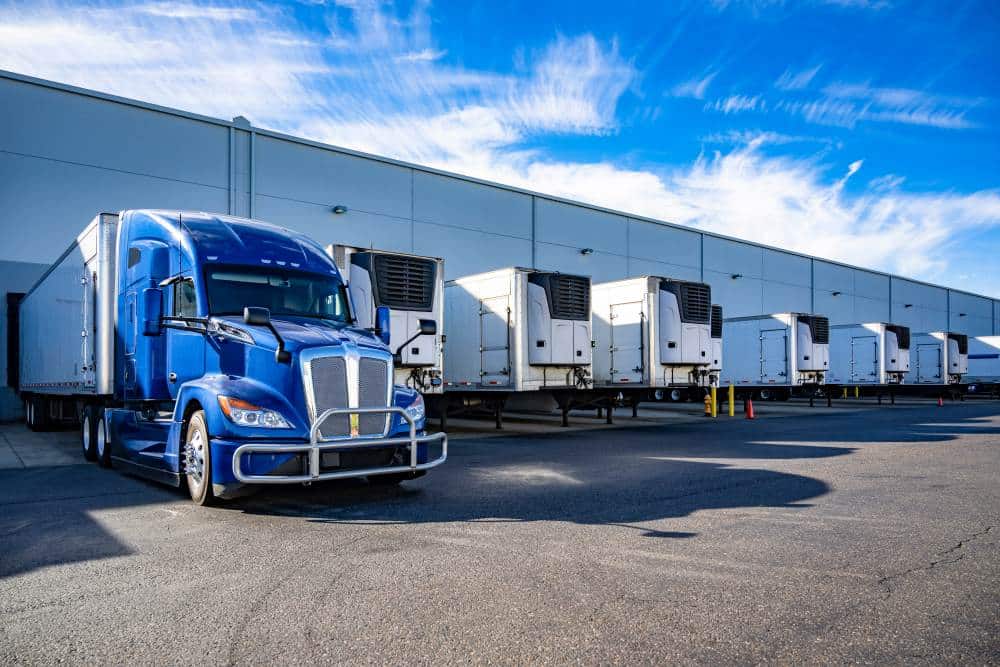
The evidence in a commercial truck accident case differs from a car accident case. One of the critical differences is that the shelf-life of some of the evidence in a truck accident is quite short.
Starting with the truck’s Electronic Logging Device, which records speed, braking, hours of service, and other operational data in the period before a crash. This device can be overwritten, and carriers are only required to retain it for six months under federal regulations (as you will see in a moment, an attorney can demand preservation immediately, but without that demand, it can disappear pronto.)
Similarly, dashcam and surveillance footage can be recorded over or otherwise disappear within days if not preserved.
Other evidence can be quite important to the case as well. Driver qualification files, which under 49 C.F.R. Part 391 must include the driver’s history, medical certifications, and prior employment records, can be critical evidence of a carrier’s hiring decisions.
Maintenance records of course document whether required inspections occurred.
A full investigation into truck accident liability in Texas also includes police crash reports, witness statements, cargo documentation, cellular phone records, and in complex cases, reconstruction by an expert who can analyze speed, impact forces, braking distances, and point of collision.
Given all of this, one of the most important steps after a serious truck accident is having your Houston truck accident attorney send a written “preservation demand” to the carrier immediately. This requires them to retain all of the above material. If a carrier destroys or allows evidence to be overwritten after receiving a preservation demand, Texas courts can impose sanctions and allow a jury to draw an adverse inference against the carrier at trial.
As such, that preservation demand letter can be one of the most consequential documents in the entire case.

Federal regulations under 49 C.F.R. Part 387 require motor carriers to maintain a minimum level of financial responsibility (much more than what is required for a personal automobile.) This commercial coverage is evidenced by an “MCS-90 endorsement” on the truck’s insurance policy. For carriers hauling general freight, this federal minimum is $750,000. For carriers transporting hazardous materials, it is $1 million or higher, depending on the commodity.
Also, because multiple parties may be liable in a truck accident, multiple insurance policies may be available. The driver may carry one policy, the carrier has its own, and a cargo loading company or maintenance contractor carries their own as well. Identifying every policy and every insured party is one of the most important tasks in a truck accident case, and one of the first things an attorney will pursue.
Texas truck accidents routinely produce serious injuries, and Texas law provides a broad framework for recovery. Injured victims can pursue:
Where the conduct was egregious, such as a driver who falsified hours-of-service logs or got behind the wheel while knowingly impaired, punitive damages may also be available under CPRC § 41.003.
What a claim is ultimately worth turns on the liability of the respective parties, the cause of the accident, the nature of the injuries, how many defendants can be held responsible, and the insurance coverage each of them carries.

Truck accident cases can be quite challenging because trucking companies do not wait; they know how to protect themselves and they act fast. When a serious crash is reported, many carriers dispatch their own investigators to the scene within hours. Make no mistake about it: Their job is to document what helps the company and limit access to what does not. Their insurance company’s adjusters follow quickly. Given that, the timeframe between when the crash occurred and the moment you retain counsel is when the most critical evidence is most at risk.
These cases also involve multiple defendants, each with their own insurance and their own legal team. Each insurer wants to shift as much blame as possible onto the others, or onto you. Sorting out who owes what means that you need an attorney who knows how to pursue all of them simultaneously.
The good news is, Texas personal injury firms like Armstrong Lee and Baker offer contingency basis fee structures which means you pay no fee unless you win. This allows individuals injured in truck accidents to pursue full compensation for their injuries without fear of a hefty bill coming back to bite them.
Texas gives injury victims two years to file a claim. (CPRC § 16.003.) Two years may seem like a long runway, but really it is not, especially when the evidence that can establish liability is measured in days and the other side is already working the file.
Sorting out trucking company liability requires a Houston truck accident lawyer who knows federal motor carrier law. If you or someone you love was involved in a commercial truck accident in the Houston area, the question of who is liable is not one you want to answer on your own. These companies have investigators, adjusters, and legal teams already working the case.
Armstrong Lee & Baker LLP handles truck accident cases throughout Houston and surrounding areas. The consultation is free, and there is no fee unless we recover for you.
C.J. Baker represents victims with serious injuries and he won’t let any corporation or insurance company stop his clients from getting complete justice. He has won millions of dollars for victims of 18-wheeler crashes, oilfield equipment failures, offshore platform explosions, and defective medical devices. Our lawyers have 25+ years of combined experience.




This page has been written, edited, and reviewed by a team of lawyers following our comprehensive editorial guidelines. Our lawyers have more than 20 years of legal experience as personal injury attorneys.
As you navigate your financial situation after a truck accident, it’s important to note that there is no true “average” settlement amount for a truck accident. A ...
Posted by Joshua Lee
As you wonder how much a truck accident lawyer costs, the good news is that you typically won’t have to pay anything upfront. Most personal injury lawyers, includingÂ...
Posted by C.J. Baker
There’s no set timeline to how long a truck accident lawsuit takes, but a serious truck accident case can easily take one to two years or longer to resolve. Some case...
Posted by Joshua Lee
 Call
Call
 Message