
832.402.6637Free Consultation
Forklifts are designed to move extremely heavy loads, but when something goes wrong, that same weight and power can cause devastating injuries. A forklift can crush a worker, pin someone against a wall or piece of equipment, drop a heavy load, or tip over and throw the operator from the vehicle.
If you were injured in a forklift accident at work, you may be facing significant medical bills, lost income, and an injury that affects your ability to work and live normally. Depending on what caused the accident and who was responsible, you may have a claim for substantial compensation.
Before giving a recorded statement to an insurance company, signing paperwork from your employer, or accepting a settlement, talk to a Texas forklift accident lawyer about your rights. Armstrong Lee & Baker LLP investigates workplace accidents, identifies the parties responsible, and fights to recover the compensation injured workers deserve.
Get a Free Case Evaluation
The fact that an employee was operating the forklift doesn’t necessarily mean that employee is legally responsible for an accident.
In many forklift injury cases, the operator is only one part of a larger problem. An employer may have failed to properly train the operator, allowed an untrained employee to use the equipment because no certified operator was available, failed to maintain the forklift, overloaded it, or allowed dangerous conditions to develop around the worksite.
OSHA requires employers to ensure forklift operators are properly trained and evaluated before operating powered industrial trucks. Safe operation also depends on appropriate equipment, maintenance, workplace conditions, and supervision.
That means investigating a forklift accident requires looking beyond the final moments before the injury and understanding why the accident was able to happen in the first place.
Serious forklift accidents often involve several failures at once. An investigation should examine:
Operating a forklift requires specialized training. Employees need to understand the equipment, the loads they are carrying, and the hazards around them.
OSHA requires formal instruction, practical training, and workplace evaluation. Refresher training may also be required after certain accidents or near misses, when an operator demonstrates unsafe operation, or when workplace conditions change.
Training problems can arise when instruction is rushed, incomplete, provided by an unqualified instructor, or treated as a formality rather than actual preparation for the job.
Some workplaces do not have enough properly trained operators to cover every shift. When the certified employee is absent, another worker may be pressured to “just move something real quick” to keep production moving.
An employee who has never been properly trained may feel pressure to accept the assignment rather than refuse it. If an employer knowingly allows an untrained employee to operate a forklift, that can become important evidence in determining liability.
A poorly designed or maintained workplace can make routine forklift operations extremely dangerous. Potential hazards include:
When workers and forklifts are forced to operate in the same congested area without adequate safeguards, an accident may be a foreseeable consequence of the employer’s decisions.
Sometimes the problem is the forklift itself. An employer may provide equipment that is not appropriate for the work, fail to perform necessary maintenance, or continue using a forklift despite known mechanical problems. Investigators may examine inspection and maintenance records, safety equipment, the forklift’s capacity, and whether attachments or modifications created additional hazards.
Forklifts have weight and load limitations. When workers are pressured to move loads beyond those limits, or when a load is improperly positioned, the equipment can become unstable.
A raised load can create additional danger if it shifts or falls. A forklift that tips or loses stability can also put the operator at serious risk.
Employers may be responsible when they provide inadequate equipment, ignore load limitations, or create production pressures that encourage workers to exceed safe operating limits.
Forklifts are specialized industrial equipment. They are not designed to be improvised as lifting platforms, supports, work stands, or substitutes for other equipment.
An employer may face liability when workers are encouraged or permitted to use forklifts for purposes they were not designed to perform, particularly when the employer knew or should have known that the practice created a serious hazard.
Client Reviews
 Google Review
I cannot recommend Kelly Viktorin at Armstrong Lee & Baker highly enough. After being injured at work, I was incredibly discouraged as many attorneys wouldn’t take my case due to the complexities involved. From our very first consultation, Kelly and her team jumped right in, demonstrating a level of dedication and expertise that immediately put me at ease. Throughout the entire process, their communication was outstanding. I was consistently kept informed of any updates and felt like a priority. Kelly truly went above and beyond to fight for me, and I am so grateful for her hard work and commitment. If you’re facing a challenging work injury case, especially with a Texas non-subscriber, don’t hesitate to reach out to Kelly Viktorin. You’ll be in excellent hands.
Google Review When I got injured my company didn’t have workers comp. They had something called non subscriber insurance. I tried a dozen or more lawyers and no one would take my case. I lost my house in Texas so right as I was moving back to where I was from, Florida, I called Armstrong Lee & Bkaer. They said they could take my case. Shortly after I meet Adam Grable.
Adam took the case and unraveled it like a champ. It was a difficult case and that’s why other lawyers didn’t take. Over the next year, Adam because a friend and a member of the family. I found him brilliant and personable and when needed he found for me. In the end, we took a settlement even though Adam told me he had a good shot at trial. He understood i wanted this behind me! If you ever find yourself needed a lawyer trust me Adam Grable will be on your side!
Google Review I had been injured at work, and the attorneys at Armstrong Lee & Baker fought for what I was owed. I’m graciously appreciative for their attentiveness and swiftness with handling my case. Shout out to Lindsey W.
Google Review When I got injured my company didn’t have workers comp. They had something called non subscriber insurance.
I tried a dozen or more lawyers and no one would take my case.
I lost my house in Texas so right as I was moving back to where I was from, Florida, o call Armstrong and Lee. They said they could take my case. Shortly after I meet Adam Grable.
Adam took the case and unraveled it like a champ. It was a difficult case and that’s why other lawyers didn’t take.
Over the next year, Adam because a friend and a member of the family.
I found him brilliant and personable and when needed he found for me.
In the end, we took a settlement even though Adam told me he had a good shot at trial. He understood i wanted this behind me!
If you ever find yourself needed a lawyer trust me Adam Grable will be on your side!
View More Reviews on Google Maps.
Not every forklift accident involves the person behind the wheel.
Workers walking through warehouses, manufacturing facilities, loading areas, construction sites, and other workplaces can be struck by a moving forklift or trapped between the forklift and another object.
Some of the most serious pedestrian accidents happen when a forklift is backing up, turning, maneuvering a load, or operating where the operator has limited visibility. A worker may suffer a crushed foot or leg, be pinned against a wall or piece of equipment, or be struck by a falling load. Severe accidents can result in amputations, spinal cord injuries, traumatic brain injuries, and other permanent disabilities.
These cases require an examination of the entire work environment:
The answers can help determine who is legally responsible.
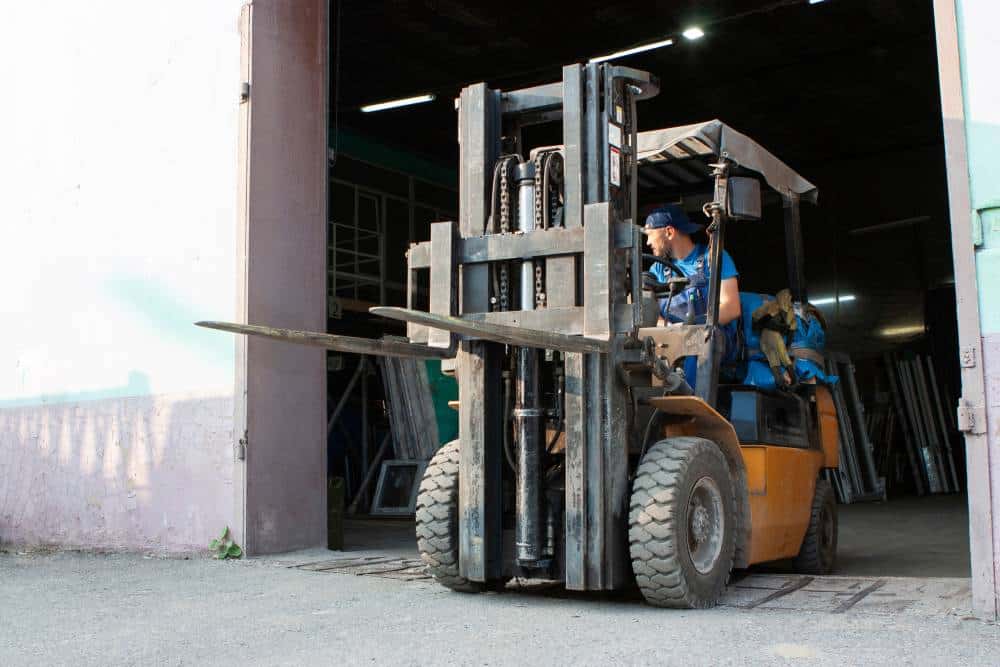
Forklift operators face their own serious risks. A forklift can tip over when a load is too heavy, improperly positioned, or raised too high. A sudden shift in the load or loss of stability can cause the operator to be thrown from the vehicle or trapped beneath it.
Other accidents can happen when a forklift drives off a loading dock, falls between a dock and trailer, collides with another vehicle, or loses control because of unsafe workplace conditions.
An operator’s involvement in the accident doesn’t automatically mean the operator cannot recover compensation. If you were performing an assigned task and made a mistake while operating a forklift, your training, instructions, equipment, staffing, and workplace conditions may all matter.
Potentially, but this is more complicated than simply asking who was driving.
An employee who intentionally or recklessly causes an accident may potentially face individual liability depending on the circumstances. But an employee making a mistake while performing assigned work does not necessarily become legally responsible for the entire accident.
An operator may have made an unsafe maneuver while the employer simultaneously failed to provide adequate training, supervision, or equipment. A forklift accident investigation should therefore look at the entire chain of events rather than simply blaming the person behind the controls.
Armstrong Lee & Baker LLP represents injured workers throughout Texas, including Houston and surrounding communities. We investigate serious workplace accidents, pursue the parties responsible, and fight for the compensation our clients are entitled to.
If you have been injured in a forklift accident, contact Armstrong Lee & Baker for a free consultation. You don’t have to figure out your next steps alone.
Potentially, but this is more complicated than simply asking who was driving.
An employee who intentionally or recklessly causes an accident may potentially face individual liability depending on the circumstances. But an employee making a mistake while performing assigned work does not necessarily become legally responsible for the entire accident.
An operator may have made an unsafe maneuver while the employer simultaneously failed to provide adequate training, supervision, or equipment. A forklift accident investigation should therefore look at the entire chain of events rather than simply blaming the person behind the controls.
There is no standard settlement amount for a forklift accident in Texas. The value of a claim depends on:
Depending on the circumstances, compensation may include medical expenses, future medical care, lost income, reduced earning capacity, physical pain, emotional suffering, and other losses.
A serious injury can substantially increase the value of a claim, particularly when a worker suffers permanent disability, requires extensive treatment, or cannot return to the work they performed before the accident.
Contributing to an accident does not necessarily mean you have no case. Texas follows a modified comparative negligence rule, so an injured person who is not more than 50% responsible may still be able to recover damages, although the amount recovered can be reduced based on their percentage of responsibility.
No attorney can guarantee the outcome of a particular case. However, a forklift accident claim may be strong when evidence shows that another party’s negligence caused or contributed to the injury.
Important evidence can include forklift inspection and maintenance records, training and certification records, workplace policies, accident reports, photographs, surveillance footage, witness statements, medical records, and information about the load and equipment involved.
Some of the most important evidence may be controlled by the employer. Equipment can be repaired or moved, video footage can be overwritten, and witnesses’ memories can fade.
That’s why it’s important to investigate a serious forklift accident as soon as possible.
Your first priority should be getting appropriate medical attention. Even injuries that initially seem manageable can become more serious, particularly after a crushing injury or high-impact accident.
You should report the accident through the appropriate workplace process and preserve any information you have about what happened.
You should also be cautious about giving a recorded statement to an insurance company or signing documents before you understand your rights. The employer’s insurance company is not your attorney, and its interests may not be the same as yours.
Speaking with an attorney early can help protect your interests while questions about liability and damages are being investigated.
The process depends on your employment situation and the parties responsible for the accident.
If your employer carries workers’ compensation insurance, your injury claim may be governed by the Texas workers’ compensation system rather than a traditional personal injury lawsuit. Texas private employers generally can choose whether to carry workers’ compensation coverage. Different legal rules may apply to employers that do not carry it.
A forklift accident can also involve a third party, such as another company, property owner, equipment manufacturer, staffing company, or contractor. Depending on the circumstances, a third-party claim may provide another avenue for recovering compensation.
An attorney can determine what type of claim you may have, identify potentially responsible parties, and explain your legal options.
A serious forklift accident case often requires more than submitting medical bills to an insurance company. Our attorneys can investigate the accident, identify potentially responsible parties, preserve important evidence, review workplace and equipment records, and work with qualified experts when necessary to determine how the accident occurred.
We can also handle communications with insurers and opposing parties while documenting the full extent of your injuries and financial losses. If a fair settlement cannot be reached, we prepare the case for trial. Our goal is to build the strongest case possible for the compensation you need.
Armstrong Lee & Baker handles personal injury cases on a contingency fee basis.
This means you don’t pay upfront attorney’s fees. Instead, our fee comes from the recovery we win for you. If there is no recovery, you generally do not owe an attorney’s fee.
This allows injured workers to pursue legal representation without paying a large legal bill while dealing with medical treatment and lost income.
Texas generally gives an injured person two years from the date a personal injury claim accrues to file a lawsuit, although exceptions can apply.
The deadline can be particularly important in forklift accidents because determining the correct defendant and type of claim may take time. If a third party is responsible, or if your employer doesn’t carry workers’ compensation insurance, additional legal questions may need to be answered.
Don’t wait until the deadline is approaching to find out what your legal options are.
A forklift accident can leave you dealing with far more than a temporary workplace injury. Crush injuries, amputations, spinal injuries, traumatic brain injuries, broken bones, and other serious injuries can affect your ability to work and your life for years to come.
If you were injured operating a forklift or were struck by one while working in Texas, you deserve to understand who may be responsible and what your claim may be worth.
Armstrong Lee & Baker LLP represents injured workers throughout Texas, including Houston and surrounding communities. We investigate serious workplace accidents, pursue the parties responsible, and fight for the compensation our clients are entitled to.
If you have been injured in a forklift accident, contact Armstrong Lee & Baker for a free consultation. You don’t have to figure out your next steps alone.
C.J. Baker represents victims with serious injuries and he won’t let any corporation or insurance company stop his clients from getting complete justice. He has won millions of dollars for victims of 18-wheeler crashes, oilfield equipment failures, offshore platform explosions, and defective medical devices. Our lawyers have 25+ years of combined experience.



It depends on whether your employer carries workers’ compensation insurance and the circumstances of the accident. Texas private employers generally can choose whether to carry workers’ compensation coverage, and different legal rules may apply to employers that do not carry it.
You may still have a claim. Operating the forklift does not automatically make you responsible for the accident or prevent you from recovering compensation. Your training, instructions, equipment, workplace conditions, and employer’s safety practices may all be relevant.
That can be important when determining liability. OSHA requires employers to ensure forklift operators are properly trained and evaluated before operating powered industrial trucks. If an employer allowed an untrained employee to operate a forklift because no certified operator was available, that may provide important evidence of negligence.
Consider speaking with a lawyer before giving a recorded statement or accepting a settlement offer. An attorney can help you understand your rights and the potential value of your claim before you make statements or decisions that could affect your recovery.







Trusted Personal Injury Attorneys in Houston
Find out if you have a case or ask us a question
by filling out the form below or call us at 832-402-6637
Armstrong, Lee & Baker did an absolutely wonderful job with my case. The resolution of my case was above and beyond what I expected! Shruti, the associate who handled my case showed great professionalism and I could not be more satisfied with the outcome. Thank you all!...

Josh Lee has been the best lawyer. He fights hard for you and will not give up until you are paid what you deserve. We were very fortunate to find him and his team. Any questions or concerns he was available day and night to answer anything we needed!
I had a great experience with this law office. The team communicated effectively and provided clear timelines for my accident case. Their professionalism and transparency made the process smooth. I highly recommend!! Emma Coomes and Dennise were amazing !

This page has been written, edited, and reviewed by a team of lawyers following our comprehensive editorial guidelines. Our lawyers have more than 20 years of legal experience as personal injury attorneys.
 Call
Call
 Message