
832.402.6637Free Consultation
Updated & Reviewed by
Joshua Lee -
June 22, 2026
If you were in a car accident in Texas, the first thing you need to know is that Texas is what is known as an “at-fault state.” That means if another driver caused your accident, if they were the one at fault, it is their insurance, not yours, that is legally and financially responsible for your medical bills, your lost income, and your pain and suffering.
But the details matter, and in Texas car accident law, they can matter a great deal. For example, the law that governs how much you can actually recover in a car accident is quite specific. Under Texas Civil Practice and Remedies Code (“CPRC”) § 33.001, if you are found more than 50% at fault for the crash, you will recover nothing; not a reduced amount, nothing. Nada. Zilch.
And that is just for starters. So let’s see which Texas car accident laws might make a difference in your case.
After a car crash in Texas, the driver who caused it is the person who is legally responsible for damages and injuries. As mentioned, this is what car accident injury lawyers mean when they say Texas is an “at-fault” state, as opposed to the roughly a dozen states that follow “no-fault” rules, where you first turn to your own insurance regardless of who caused the accident.
What that means practically is that you have options. If the other driver was at fault, you can,
Most cases resolve through insurance. But knowing that a lawsuit is available, and that Texas law protects your right to pursue one, can matter a lot when an insurance company stops cooperating.
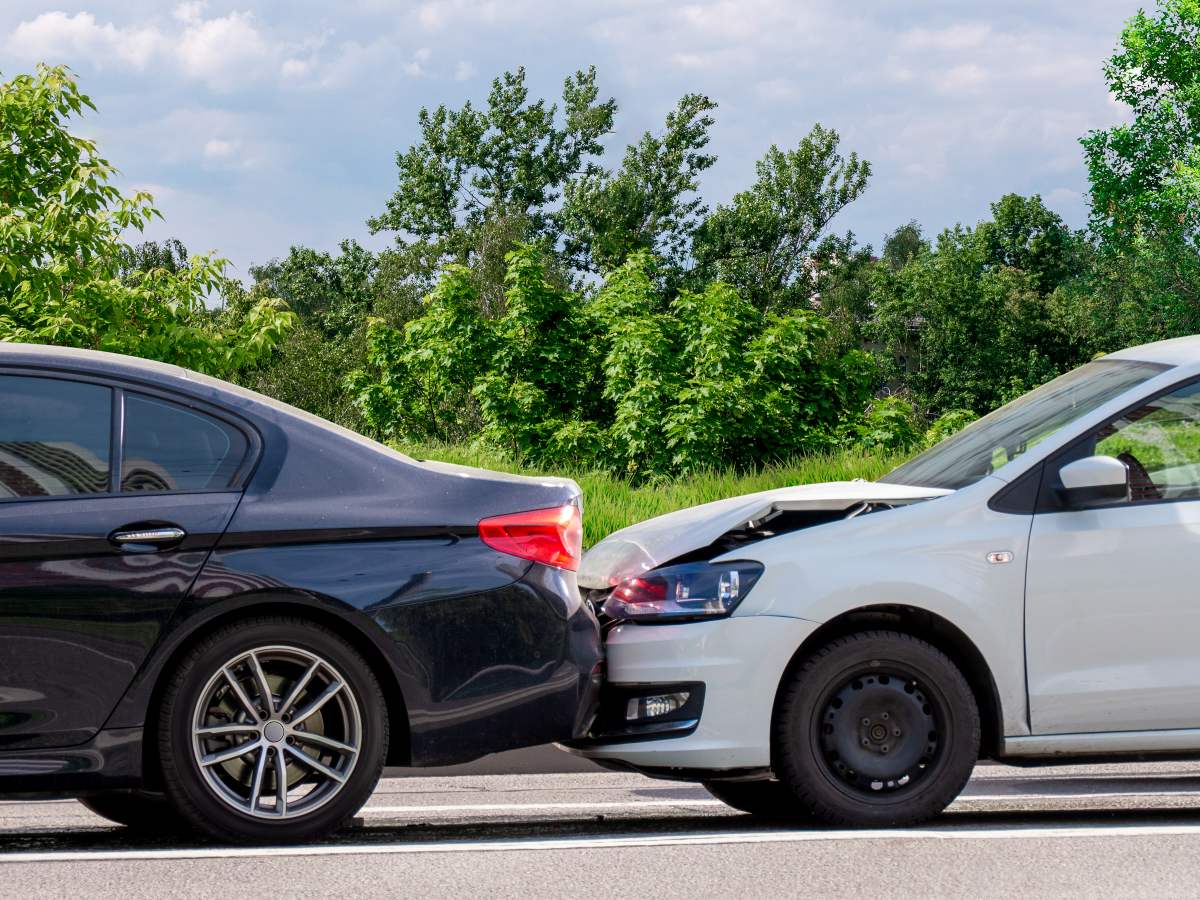
Not always, but you always should.
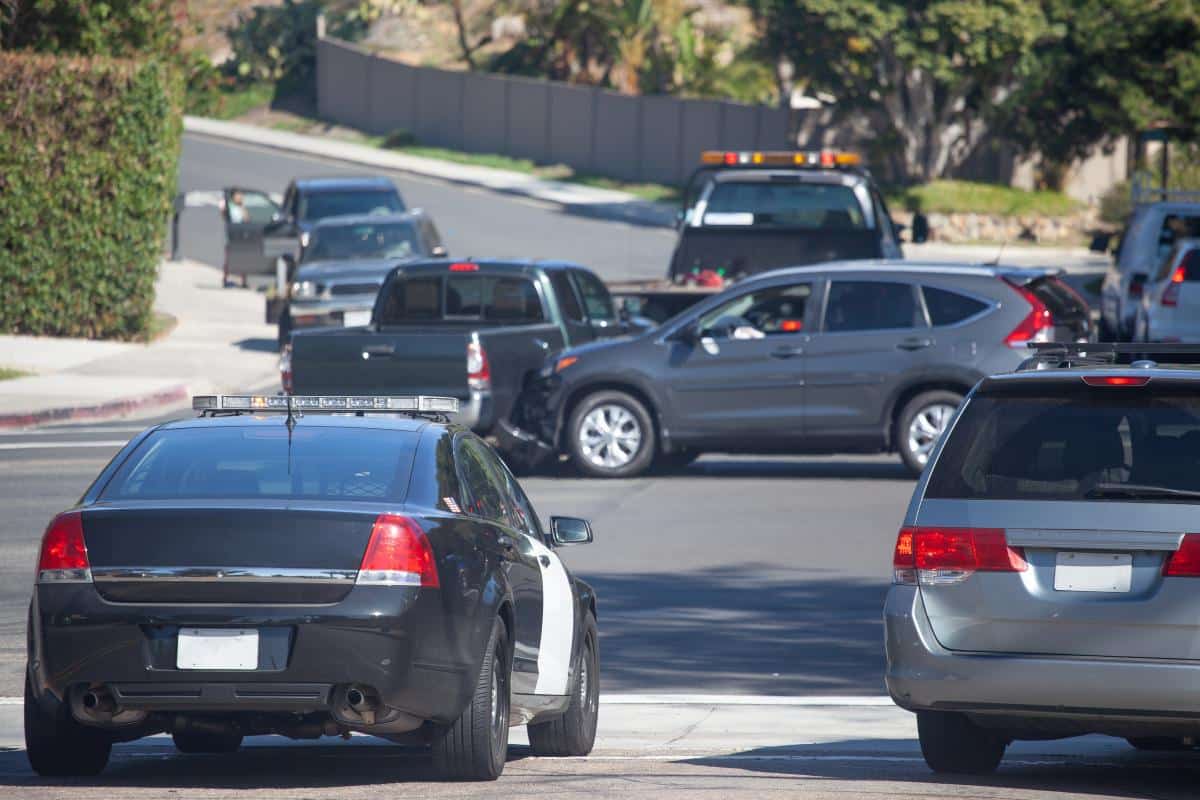
Under Texas Transportation Code § 550.026, you are required to report any accident to local law enforcement that resulted in injury, death, or property damage that appears to exceed $1,000. Inside a city, you would report it to the police department and outside a city, you would report it to the county sheriff.
Even so, the smart answer is to always report, no matter how minor things seem.
Here is why: The official crash report, known as the CR-3 (Texas Peace Officer’s Crash Report), becomes one of the most important documents in your case. It records the officer’s on-scene observations, the road conditions, witness contact information, and often a preliminary determination of who violated a traffic law. Insurance adjusters and attorneys both use it.
You can obtain a copy of your CR-3 through the Texas Department of Transportation’s Crash Records Information System (CRIS) portal, typically within 10 business days of the crash.
And what if you do not report it and there is no police report? In that case, you only hurt yourself because you have eliminated a vital piece of evidence from your own case.
Texas law requires every driver to carry liability insurance.
The minimums, set out in Transportation Code § 601.072, are
You will hear this called “30/60/25” coverage.
Those amounts may sound reasonable . . . until you realize that a single ambulance ride, an emergency room visit, and one night in a Houston hospital can easily exceed $30,000, and that is before any surgery or follow-up care. Ouch indeed.
As you can see, while Texas law allows the minimums, it does not follow that they are even remotely adequate.
So, what happens when the at-fault driver’s policy is exhausted and your damages exceed them? In that case, you can sue the other driver personally, but the problem with that is that a driver who carries minimum coverage rarely has substantial assets to satisfy a judgment.
What to do? This is where your own policy comes into play.
Under Texas Insurance Code § 1952.152, every auto insurance policy issued in Texas must include personal injury protection (“PIP”) coverage unless you reject it in writing. PIP covers your own medical bills and a portion of lost wages immediately after a crash, regardless of who was at fault. The good news is that you do not have to wait for the other driver’s insurer to accept liability. The money is there when you need it.
Another excellent option you have is because of Texas Insurance Code § 1952.101. Under that statute, every auto policy must also include uninsured and underinsured motorist coverage, again, unless you reject it in writing.
Uninsured motorist coverage steps in when the at-fault driver has no insurance at all, including hit-and-run situations.
Underinsured motorist coverage is for the more common scenario where the other driver has insurance, but their policy limits are too low. Say your damages are $120,000 and the at-fault driver carried the minimum $30,000 policy. Their insurer would pay $30,000 and your underinsured motorist coverage can bridge the gap, up to whatever limits you chose.
Both coverages are available by default in Texas. The only way you lose them is if you signed something saying you did not want them. If you are not sure whether you have them, pull out your policy and check.
Texas follows a legal rule called “comparative negligence.” Part of CPRC § 33.001, the rule states that if you were partly at fault for the accident, your damages are reduced by your percentage of fault. So, for example, if a jury decides you were 20% responsible and your total damages are $100,000, you would only collect $80,000.
Straightforward, yes, but the key thing to appreciate is that there is a hard cutoff: If you are found 51% or more at fault, you recover nothing.
This matters long before any lawsuit is filed and long before any check is cut. Insurance adjusters know this rule and they use it quite deliberately. When you file a claim, the adjuster will evaluate what a jury would likely decide, and their job is to assign as much fault to you as possible. Every percentage point they can pin on you will reduce the amount they will settle for accordingly.
And once they can push it past that magic 51 percentage, they write no check at all.
This is, among other reasons, why you need an experienced personal injury attorney early on after your accident. Good lawyers know the rules and, like insurance adjusters, know how to use them in their favor, in your favor.
For injured passengers, compensation usually depends on who was at fault for the crash and whether the passenger shares any responsibility for their own injuries. If the passenger is not at fault, they may be able to recover damages from all responsible drivers, with each driver generally responsible according to their percentage of fault.
For example, if the driver you were riding with was 20% responsible for the crash and the other driver was 80% responsible, both drivers may be responsible for the passenger’s injuries: your driver for 20% of the damages and the other driver for 80%. The passenger’s recovery would not be reduced unless the passenger was also found partly responsible for causing their own injuries.
If you had a pre-existing condition like a bad back or a bad knee before the auto accident, that does not disqualify your claim. Texas follows what is known as the “eggshell plaintiff” doctrine. The principle is that the at-fault driver takes you as they find you.
If, say, the crash aggravated a herniated disc that was already causing you problems (i.e., you were as fragile as an eggshell), the at-fault driver is nevertheless responsible for whatever their negligence did to you. That includes the full extent of any aggravation, even if someone without that condition would have walked away uninjured.
Insurance adjusters will argue that your injuries were pre-existing, but under Texas law, that argument fails when the crash made your condition measurably worse.
A Texas car accident claim can address several categories of loss.
Economic damages are the concrete, more easily calculable costs:
These sorts of damages are documented with medical bills, pay stubs, expert testimony, and records from your medical care providers.
Non-economic damages cover what bills alone cannot capture and tend to be where big awards come from; things like physical impairment and disfigurement, pain and suffering, and mental anguish.
These are all legitimate losses, recognized under Texas law, and they are the category insurers fight hardest to minimize.
Punitive damages are also called “exemplary damages” in Texas, and are reserved for conduct that rises above ordinary negligence to gross negligence or intentional misconduct. A drunk driver running a red light at high speed and killing a child is a different legal situation than someone who misjudged a lane change. The law thinks that the drunk driver likely deserves to be punished more and that is the purpose of allowing a jury to award exemplary damages.
Under CPRC § 41.008, exemplary damages are capped at the greater of $200,000, or two times the economic damages awarded, plus either $750,000 or the amount of non-economic damages found by the jury, whichever is greater. Note: This cap does not apply if the conduct constituted a felony.
Under CPRC § 16.003, you only have two years from the date of a car accident in Texas to file a personal injury lawsuit (although if a death resulted, the two-year statute starts from the date of death.)
Two years may feel like a long time, but it really is not. Evidence can disappear a lot faster than that, e.g., dashcam footage gets overwritten within days or weeks. Witnesses move. People forget facts, incidents, details. Medical records take time to gather.
That is why a case built soon after the accident is almost always materially stronger than one built in month twenty.
This is vital: If the vehicle that hit you was operated by a city, county, or state government employee (a city bus, a TxDOT truck, a police cruiser, etc.) then you are not working with a two-year runway.
Under CPRC § 101.101, the Texas Tort Claims Act requires you to give the governmental unit formal written notice of your claim within six months of the incident. Cities may have their own rules requiring even shorter notice periods. If you miss that window, and you can lose your right to sue entirely, regardless of how clear the government’s fault was.
The notice deadline and the two-year filing deadline are separate requirements. You have to satisfy both. Missing the six-month notice period does not extend to the two-year lawsuit deadline; it ends your claim.
If a government vehicle was involved in your accident, your timeline is shorter than you think.
Texas car accident law is detailed, and the rules around fault, coverage, and deadlines exist whether you know them or not. If you were injured in a crash and believe another driver was responsible, our team of experienced Texas car accident attorneys at Armstrong Lee & Baker LLP can evaluate your claim, review the evidence, and secure the compensation you deserve.
Contact us today for a free, no obligation consultation.
Joshua Lee believes in aggressive, tough advocacy and a client-centered approach to every case. Joshua draws from a wide body of experiences and a robust understanding of the law. Joshua graduated from the New York University School of Law in New York City, which is considered among the best law schools in the world. Our lawyers have 25+ years of combined experience.




This page has been written, edited, and reviewed by a team of lawyers following our comprehensive editorial guidelines. Our lawyers have more than 20 years of legal experience as personal injury attorneys.

If you are seriously injured in a car accident, you will have to deal with your own insurance as well as the other driver’s insurance. Worrying about contact...
Posted by Scott Armstrong

A first-party insurance claim involves filing a claim directly with your own insurance company for damages or losses. This type of claim typically covers incidents affe...
Posted by Scott Armstrong
Oftentimes, the single most important document in a motor vehicle collision case is the crash report (otherwise known as police report or car accident police report). ...
Posted by Scott Armstrong
 Call
Call
 Message